
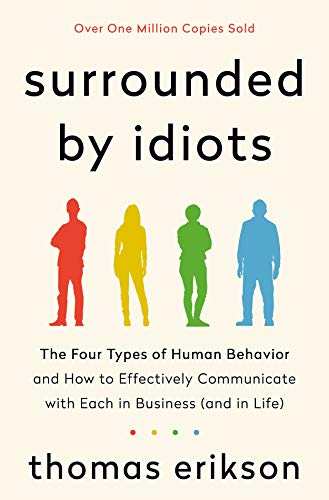
highlights
20 highlights saved, filed under leadership.
- 01
A Blue believes that good enough is never really good enough.
- 02
Greens just aren’t as precise as the other colors.
- 03
Rhetoric isn’t the art of talking but rather the art of getting others to listen.
- 04
They have a policy that you must always ask “why” five times to ensure quality and get to the heart of the issue.
- 05
Reds are quick and more than happy to take command if needed. They make things happen. However, when they get going, they become control freaks and can be hopeless to deal with. And they repeatedly trample on people’s toes.
- 06
Yellows can be amusing, creative, and elevate the mood regardless of who they’re with. However, when they are given unlimited space, they will consume all the oxygen in the room, they won’t allow anyone into a conversation, and their stories will reflect reality less and less.
- 07
The friendly Greens are easy to hang out with because they are so pleasant and genuinely care for others. Unfortunately, they can be too wishy-washy and unclear. Anyone who never takes a stand eventually becomes difficult to handle. You don’t know where they really stand, and indecision kills the energy in other people.
- 08
The analytical Blues are calm, levelheaded, and think before they speak. Their ability to keep a cool head is undoubtedly an enviable quality for all who aren’t capable of doing that. However, Blues’ critical thinking can easily turn to suspicion and questioning those around them. Everything can become suspect and sinister.
- 09
“I Try to Care About You, but It Would Help If You Were a Little More Interesting.”
- 10
By adjusting yourself to how other people want to be treated, you become more effective in your communication.
- 11
You help other people understand you by creating a secure arena for communication—on their terms.
- 12
Flexibility and the ability to interpret other people’s needs is what characterizes a good communicator.
- 13
“We see what we do, but we do not see why we do what we do. Thus, we assess and appraise each other through what we see that we do.”
- 14
In any other situation, it might be a good idea to understand how you are perceived and to learn how other people function.
- 15
The stronger your self-understanding is, the greater your probability of adapting to the people around you.
- 16
BEHAVIOR = f (P × Sf) Behavior is a function of Personality and Surrounding factors. Behavior is that which we can observe. Personality is what we try to figure out. Surrounding factors are things that we have an influence on.
- 17
But a Red detests inactivity. Things must happen. Add to this a sense of constant urgency, and a great deal will get done.
- 18
Or, in the words of a good friend of mine: There are two ways to do this—my way and the wrong way.
- 19
DISC—an acronym that stands for Dominance, Inspiration, Stability, and Compliance ability—
- 20
Everything you say to a person is filtered through his frames of reference, biases, and preconceived ideas.