
My bots are very good at the wrong stuff
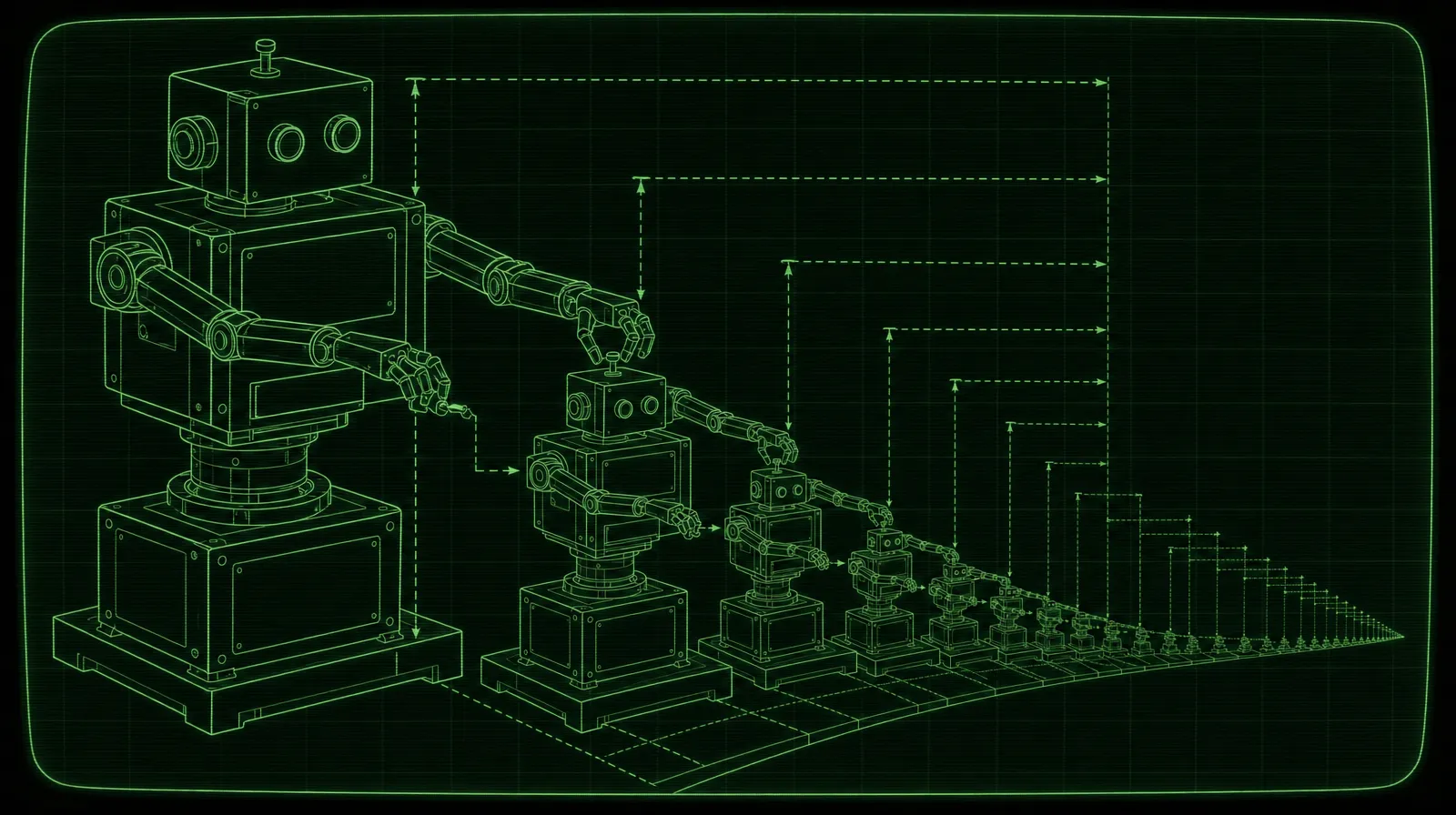
I’ve been reading The Dip by Seth Godin. It’s a short book about quitting. I highlighted 26 lines.
The first one was this:
Quit the wrong stuff. Stick with the right stuff. Have the guts to do one or the other.
I agree with every word. Then I go back to my desk, and my bots build more of the wrong stuff.
Starting is free now
Starting something used to take real effort. Now it takes a sentence. I type what I want, one bot plans it, another builds it, and by morning there’s something new.
So I start things. A lot of things.
I have 309 skills saved. A skill is a page of instructions for one kind of job. I use about 10 of them regularly. When one of those 10 gets something wrong, I don’t always fix it. Sometimes I write a new one instead. It feels like progress. It’s one more page I won’t open.
A woodpecker can tap twenty times on a thousand trees and get nowhere, but stay busy. Or he can tap twenty-thousand times on one tree and get dinner.
I have a thousand trees. Each one has neat instructions.
The factory
On Oct 11, at 3 AM, I was planning a software factory for my day job.
A board of agents. A Product Owner agent, a CTO agent, leads for backend, frontend, QA, and DevOps, and short-lived agents to do the tasks. Five projects. A chat bus so the agents could talk to each other. A wiki so they could share a brain. Mockups of all of it.
The plan opens with this line: “Nothing in here has been built yet.”
It still says that.
The same day, I highlighted this:
We fail when we get distracted by tasks we don’t have the guts to quit.
The factory was supposed to build the products. So far, it has mostly produced factory plans. The products are where I left them.
Quitting bots, making bots
On Sep 23 I deleted six bots in one day. PMP Desk, Scout, Obvious Adams, Obi the CTO bot, Hormozi, and Sabri.
It felt like a clean break.
Then I made Dr. Eggbot. Its job is designing new bots.
Tonight Dr. Eggbot built another one. It’s called Prof. It does research and teaches.
So I quit six bots and made a bot that makes bots. I’m not sure that counts as quitting.
I’ve done this before
For years I switched task managers every few weeks. I wrote about it last week in I never committed. Still haven’t.
It was avoidance. I didn’t want to commit to one thing, so I kept sampling instead.
Back then, a new task manager took an evening to set up and move into. A new bot takes a few minutes. A new skill takes less.
Simple: If you can’t make it through the Dip, don’t start.
I used to follow that line by accident. Starting was hard, so I didn’t start much. Now nothing stops me at the door.
The case for building it anyway
Godin wrote a post this summer called Disposable software:
Now, with Claude Code on everyone’s desk, new software is often easier to write than old software is to maintain.
I think he’s right. A lot of what my bots make can be thrown away, and some of it should be. A skill I never open costs me almost nothing. A plan nobody builds doesn’t break anything.
There’s some data on this too. A Linux developer tracked 120 apps tagged as AI slop on Flathub and found 73% of them abandoned or deleted within months. A rerun with a comparison group got 50% for the slop apps and 42% for normal ones. So the numbers are disputed.
The cost I notice is my attention. I’m the one who reads the reports, answers the questions, and decides what ships. Every new thing takes a slice of that, even the ones I never open again.
What I’m sticking with
The real products that make money.
Finishing what’s already built.
Neither of those needs a new bot.
I asked for help
I haven’t actually asked a bot to help me quit things. I don’t need to. I know how it goes.
“Happy to help. Here’s a plan.
Phase 1: Inventory everything you’ve started.
Phase 2: Score each item on a quitting rubric.
Phase 3: Build a dashboard to track what you’re quitting.
Phase 4: Spin up a Quitting Agent to own the process.
Phase 5: Review whether the Quitting Agent should be quit.
Want me to start Phase 1?”
I’d say yes. It would be skill number 310.
~ aq